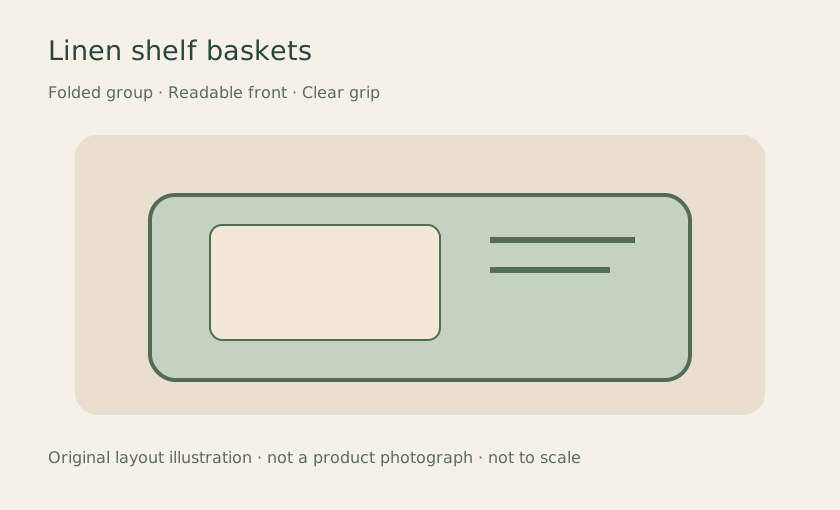
Linen shelf baskets
Compare a contained linen group with the shelf opening and a usable loaded grip.
Plan folded groups, removable baskets and occasional bedding so a deep shelf stays usable from front to back.
Record actual folded width, depth and height for a few representative items. Include door position, hinges and the shelf above. A nominal textile size or a basket’s advertised volume cannot establish the usable fit.
Keep working towels and sheet sets readable at the front. Avoid a second daily row that requires unloading the first. Reserve the deeper zone for occasional groups only when there is a manageable way to retrieve them.
A basket can bring a category forward, but its handle, rim and loaded grip need room. A deep bin that cannot leave the opening simply recreates the hidden-row problem inside a container.
Use the actual bed size, set identity or guest-kit contents. Keep one visible label position across groups. Do not make the label the only place the original textile care information survives.
Measure the complete blanket or bedding group in its intended fold. Check the shelf and selected organizer instructions for support and loaded handling. A zipped bag does not automatically establish sealed protection or compression capability.
Try putting clean pieces back with the shelf partly occupied. If one set requires moving every adjacent group, change the boundary or working quantity. Leave useful grip space instead of filling every gap.
Compare a contained linen group with the shelf opening and a usable loaded grip.
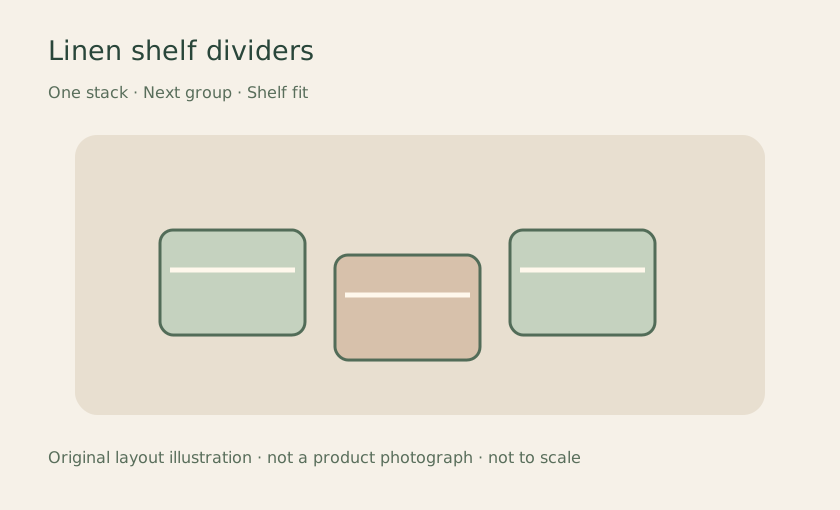
Choose boundaries around shelf construction, folded widths and mounting limitations.
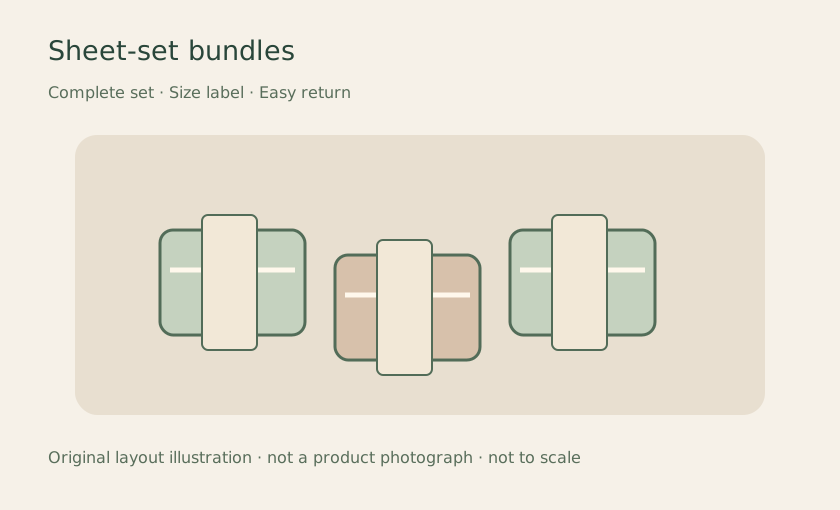
Choose a wrap, band or simple grouping that keeps a labelled set together without hiding missing pieces.
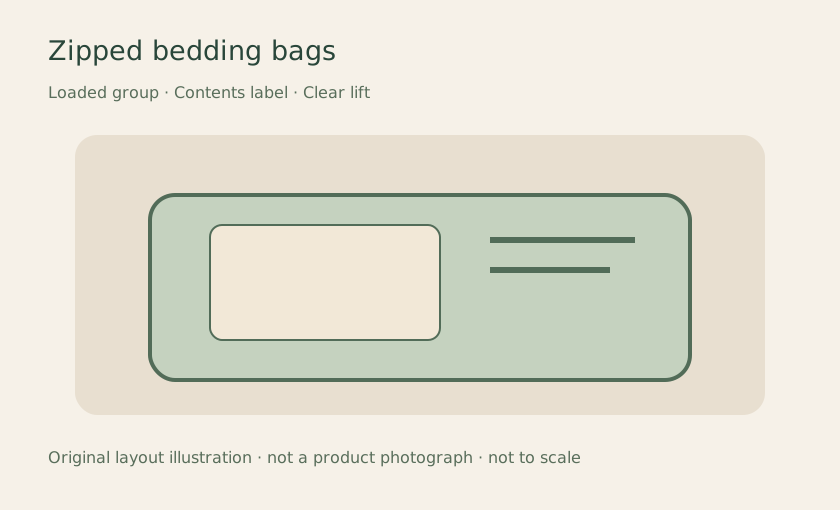
Choose a storage bag around the complete loaded group, handles and textile instructions.