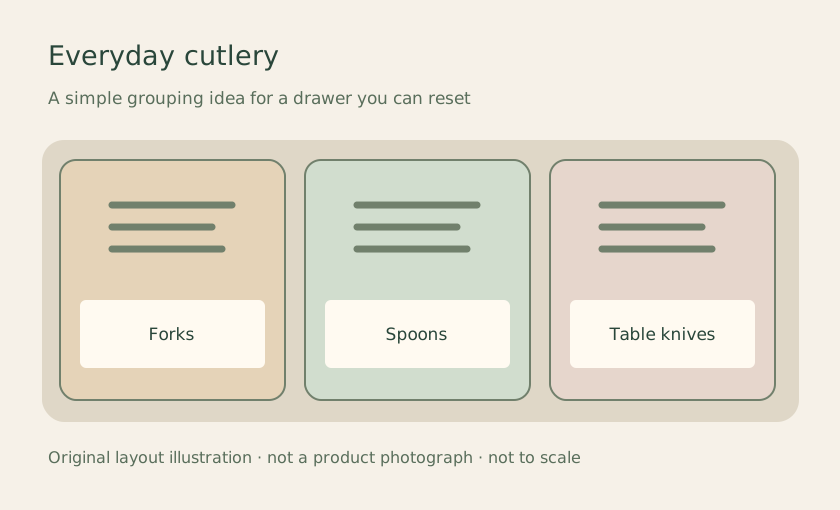
Everyday cutlery
Choose a cutlery layout that reflects the pieces you use daily.
See the layout idea →A practical sequence for grouping the contents, checking movement and choosing a layout that stays inviting after daily use.
Choose one drawer and give it a clear role: everyday place settings, cooking tools, tea packets or folded cloths. Empty it onto a clear surface and move obvious out-of-place items to their real homes. Keep the useful collection in view before selecting organizers.
Separate daily pieces from occasional extras. Try each group as a row, lane or small bin. A long ladle and a short teaspoon can both be utensils while needing very different spaces. Use the contents to choose the boundaries.
Record the clear inside width and depth, the opening height, and any intrusion from corners or fittings. Place the tallest item in its stored orientation and close the drawer gently. Empty organizer height alone does not prove a loaded setup fits.
Use paper outlines to reserve space for the longest tools, widest lid and tallest stack. Include organizer wall thickness and the space your fingers need. Then fit the smaller groups around those anchors. A set of small bins may leave gaps; decide whether those gaps are useful before buying.
Align handles, face packet labels in one direction, repeat a cloth fold, or keep bin heights consistent. One repeatable rule makes varied possessions look deliberate. Avoid a layout so packed that putting a clean item away disturbs its neighbors.
Use the arrangement for a few normal resets before extending it to other drawers. Check whether the small group disappears beneath larger items, the divider shifts in its intended use, or a tool catches the opening. Adjust the layout to the real inconvenience.
Choose a cutlery layout that reflects the pieces you use daily.
See the layout idea →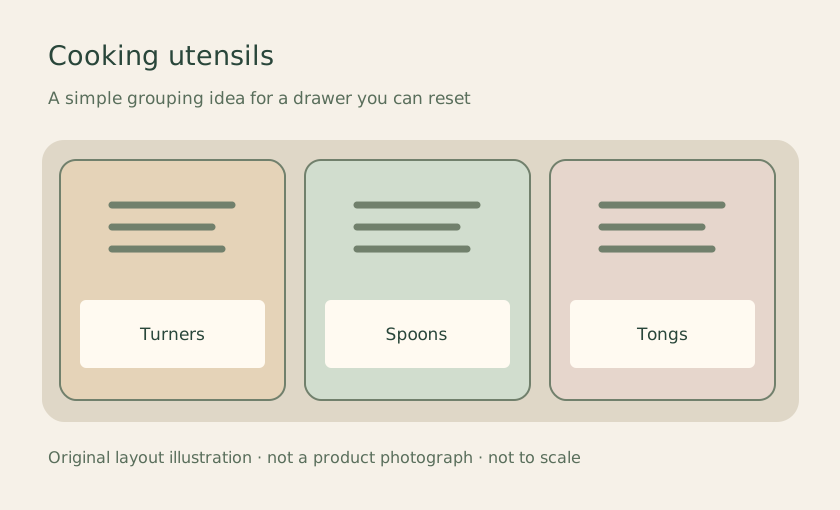
Separate long tools while allowing room for their widest heads.
See the layout idea →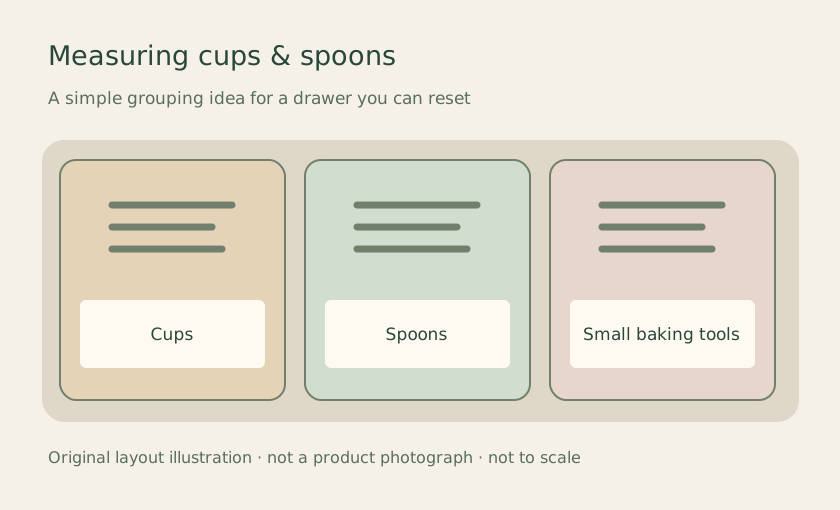
Organize nested cups, spoon sets and small baking tools around their real stored height.
See the layout idea →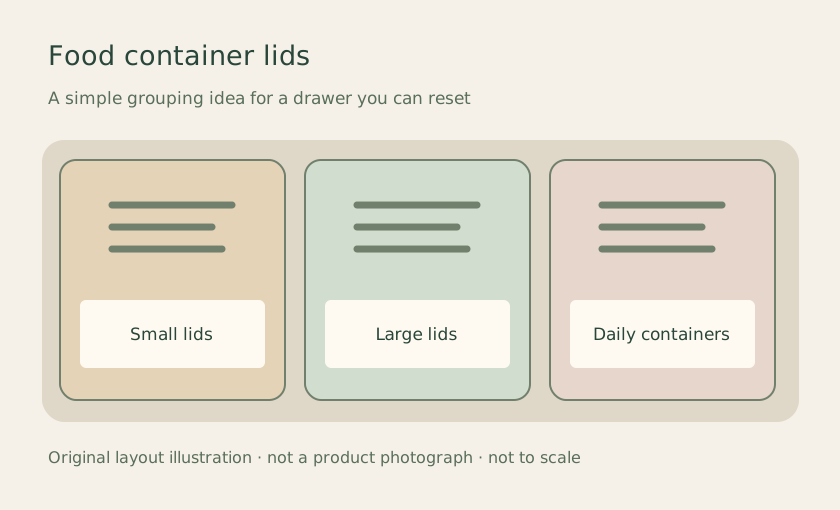
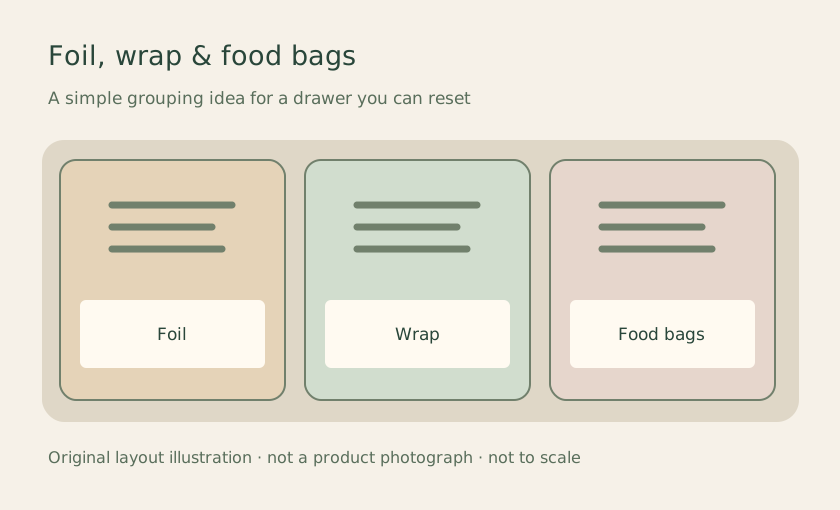
Choose between retaining original boxes and using a dispenser after checking the actual refills.
See the layout idea →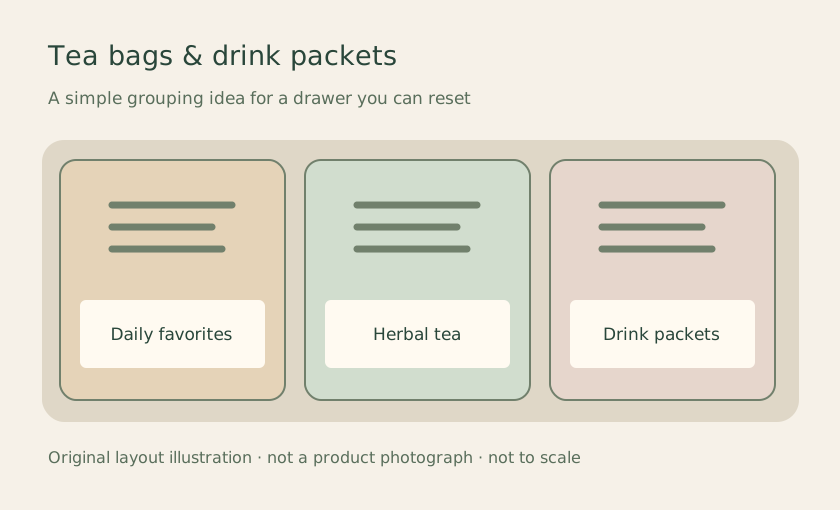
Group individually wrapped tea and drink packets into readable rows.
See the layout idea →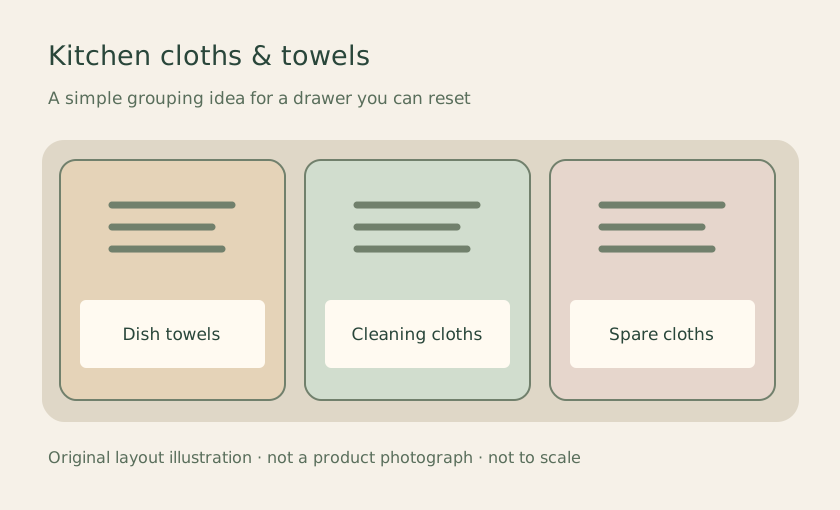
Choose folded groups around the drawer depth and the way you reach for a fresh cloth.
See the layout idea →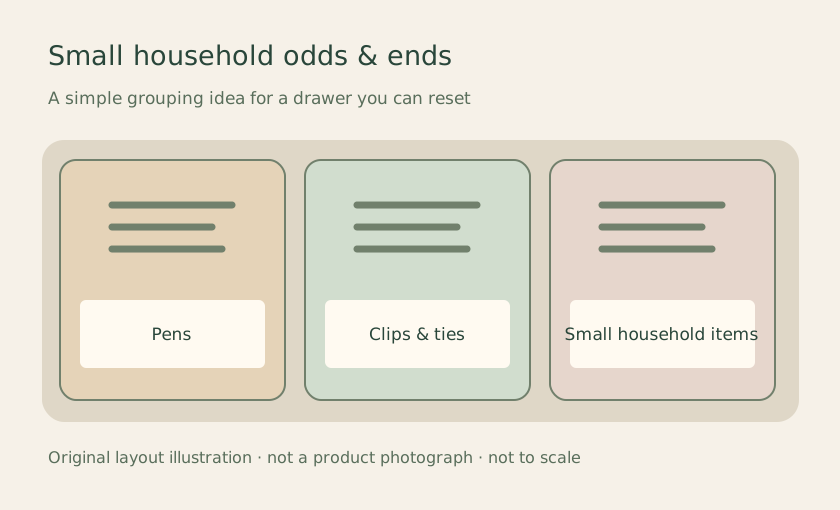
Make small everyday household items visible without turning the drawer into permanent overflow.
See the layout idea →Original editorial planning advice; illustrated layouts have not been physically tested. Check the chosen product instructions for installation and care.